Orthodox dating in Georgia
Orthodox dating in Georgia, where one church covers the whole country
Orthodox dating in Georgia across Tbilisi, Batumi and Kutaisi. One national church, the Julian calendar, family expectations, travel and safer first dates.
No ads · Delete everything in one tap
The short answer
Orthodate is open to single Orthodox Christians aged 18 and over throughout Georgia. Members can describe their parish, their spiritual father, how they keep the fasts and what kind of household they hope for, then set an age and distance range that matches real travel between Tbilisi, Batumi, Kutaisi and the regions. Local availability varies, and exact home addresses are never displayed.
Reviewed: · Editorial standards
Sources: Georgian Apostolic Autocephalous Orthodox Church: Patriarchate of Georgia
Jurisdiction is not the question here. Practice is.
In most countries an Orthodox Christian has to say which jurisdiction they belong to before a conversation can go anywhere. In Georgia the Georgian Apostolic Autocephalous Orthodox Church covers the country, so that question answers itself and the useful ones move elsewhere: how often you confess, whether you have a spiritual father and what he has blessed, how your family keeps the fasts, and whether you want the kind of household where those things set the rhythm of the week.
Because the Church is so woven into national life, it is easy for both people to assume agreement that is not there. One person may attend every Sunday and keep every fast; another may love the Church deeply, go at Pascha and Christmas, and feel no obligation beyond that. Neither is unusual. Write the honest version on your profile, because the gap between those two lives is much harder to negotiate after a year than after a week.
- Describe the week, not the label
- Liturgy, confession, communion and fasting say more than the name of the church.
- Mention a spiritual father
- Whether you have one, and how much weight his counsel carries, is a real compatibility question.
- Do not assume from the family name
- Heritage tells you where someone comes from, not how they pray.
The Julian calendar shapes the year you would share
The Georgian Church keeps the Julian calendar, so the Nativity falls on 7 January and the fixed feasts sit thirteen days behind the civil calendar. For a couple from the same background this needs no discussion at all. For anyone dating across borders, a partner from a Greek, Romanian, Antiochian or Bulgarian parish keeps those feasts on different days, while Pascha is reckoned the same way everywhere in the Orthodox world.
If the relationship involves two calendars, talk about it early and without drama. Which Nativity would the household keep? Whose family expects you on which day? What happens to a fast that starts for one of you a fortnight before the other? These are solvable questions, and couples solve them constantly, but only when they are raised before the first December rather than during it.
- Nativity on 7 January
- A partner from a Revised Julian parish keeps it on 25 December. Both are Orthodox.
- Pascha is shared
- Every Orthodox church reckons Pascha the same way, so the centre of the year already agrees.
- Decide whose calendar leads
- A mixed-calendar household works, but only if the decision is made rather than discovered.
Families are part of the conversation sooner than you expect
Courtship here tends to involve families earlier than it does in Western Europe or North America, and an engagement is often treated as a matter for two households rather than two people. That can be a gift: it brings seriousness, support and a clear path. It can also apply pressure, particularly on timing, on where a couple would live and on what is expected of a daughter-in-law or a son-in-law.
Say on your profile, or early in conversation, what you actually expect: whether you plan to live with or near parents, how soon you would want to meet each other’s families, and whether children are something you hope for soon or later. If you have obligations caring for relatives, name them. These are not awkward topics in a Georgian context; the awkwardness only comes from leaving them until a decision has to be made.
- Timing expectations
- Say how quickly you would expect a relationship to become a matter for both families.
- Where you would live
- Near parents, in another city or abroad are very different lives. Name yours.
- Care obligations
- Responsibility for a parent or grandparent shapes what is realistic. It deserves saying.
Tbilisi, the regions and the people who left
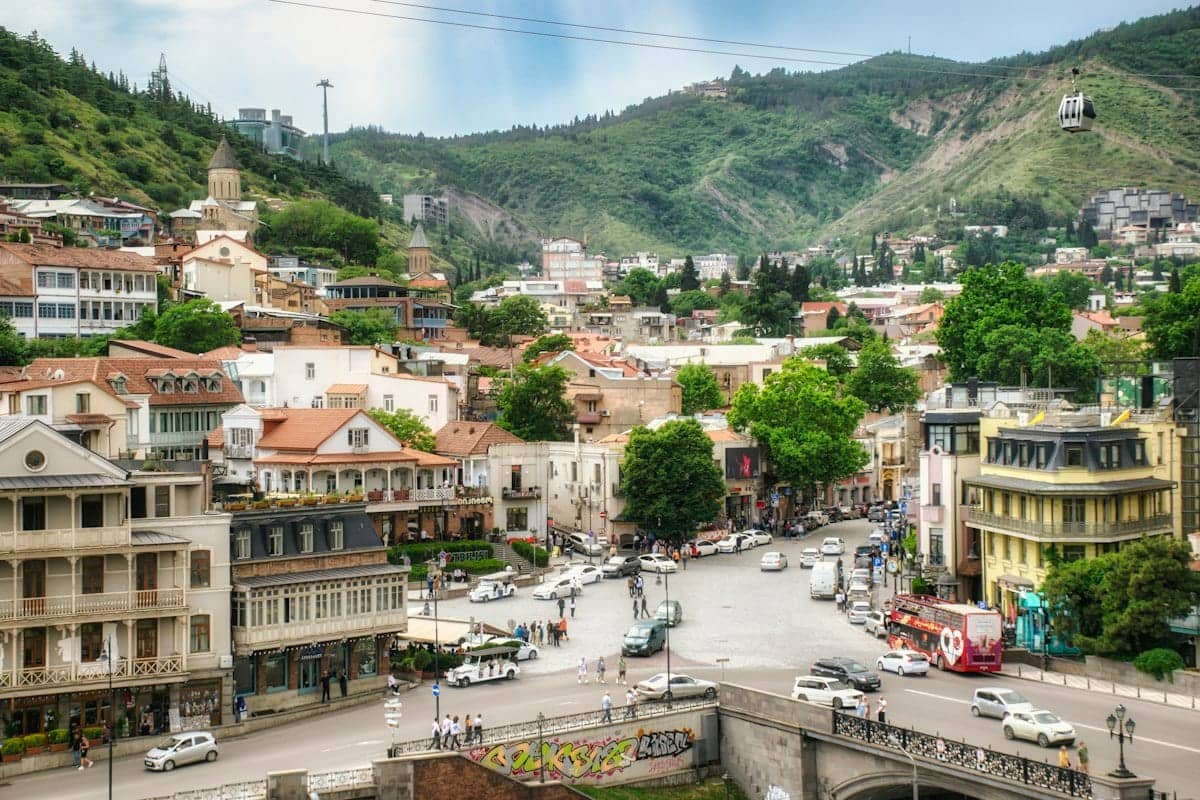
Tbilisi holds most of the country’s population and most of its jobs, and a large share of people in the capital came from a region they still consider home. Batumi runs on a coastal and seasonal rhythm of its own, Kutaisi and the western towns are a few hours away by road, and the mountain districts can be far harder to reach in winter than a map suggests. Set a distance around the journey you could repeat, not the straight line.
A great many Georgians also work abroad, and a relationship conducted between Tbilisi and a job in Europe is common. If that is your situation, say how often you could genuinely be in the country, what the plan is and when it ends. A partner who knows they are waiting for something specific is in a completely different position from one who is simply waiting.
Hospitality is wonderful. It is not a safety check.
Meet for the first time somewhere public and busy, travel there and back independently, and tell someone you trust where you are going. Georgian hospitality is justly famous, and it can make a stranger feel like an old friend within an hour; that warmth is real, and it is still not information about who someone is.
Keep your address, identity documents and banking details private while trust is forming, and never send money to someone you met online, however convincing the explanation. Use the block and report controls if someone pressures you, refuses an answer or hurries you off the app. If you both want to attend a service together, agree on it first rather than arriving at someone’s parish unannounced.
Is Orthodate available in Georgia?
Yes. Orthodate is open to eligible single Orthodox Christians aged 18 and over anywhere in Georgia, in a modern browser or through the Android app on Google Play. How many compatible members are nearby depends on location, preferences and who has joined.
How do I meet Orthodox singles in Tbilisi, Batumi or Kutaisi?
Write a profile about your actual parish life and intentions rather than a label, and set a distance based on the road or rail journey you could repeat. A country guide does not promise a particular number of nearby profiles.
If almost everyone is Georgian Orthodox, what does the app add?
It asks the questions that a shared national church leaves open: how often you confess and commune, how you keep the fasts, whether you have a spiritual father, and what kind of household you want. Those answers differ enormously between two people who use the same label.
Which calendar does the Georgian Church follow?
The Julian calendar, so the Nativity falls on 7 January. Pascha is reckoned the same way in every Orthodox church. A partner from a Greek, Romanian, Antiochian or Bulgarian parish will keep the fixed feasts on different dates.
How soon should families be involved?
That varies by household and it is worth asking rather than assuming. Say early what you expect about meeting families, where you would want to live and how soon you hope for children.
What if one of us works abroad?
It is common. Be specific about how often you could be in the country, what the arrangement is for and when it is meant to end, so the other person is not waiting on a plan that was never stated.
Can I marry in the Georgian Church if my partner is not Orthodox?
Ask the parish priest who would actually celebrate the marriage. The answer depends on the other person’s church and on the bishop responsible, and parish guidance is authoritative over anything written online.
Does Orthodate show my exact location in Georgia?
No. Orthodate does not display your home address or a precise map pin. A profile may show an approximate distance instead.
Keep exploring
Helpful next steps
- Orthodox dating in ArmeniaA neighbouring guide, and an important church-family distinction.
- Orthodox dating in GreeceAnother historically Orthodox country, with a different calendar and structure.
- Why Orthodox Pascha falls on a different dateThe reckoning behind the calendar question, explained plainly.
- Orthodox fasting seasons guideThe four seasons and the weekly fasts a shared household has to agree on.
- Questions to ask before it gets seriousThe conversations worth having before a relationship involves two families.
Meet someone who shares your faith and intentions.
Build a thoughtful profile, discover Orthodox singles and start with a real conversation.